Imagine, I was the SME and Lead Supervisor here – when I was only in my mid 20’s!
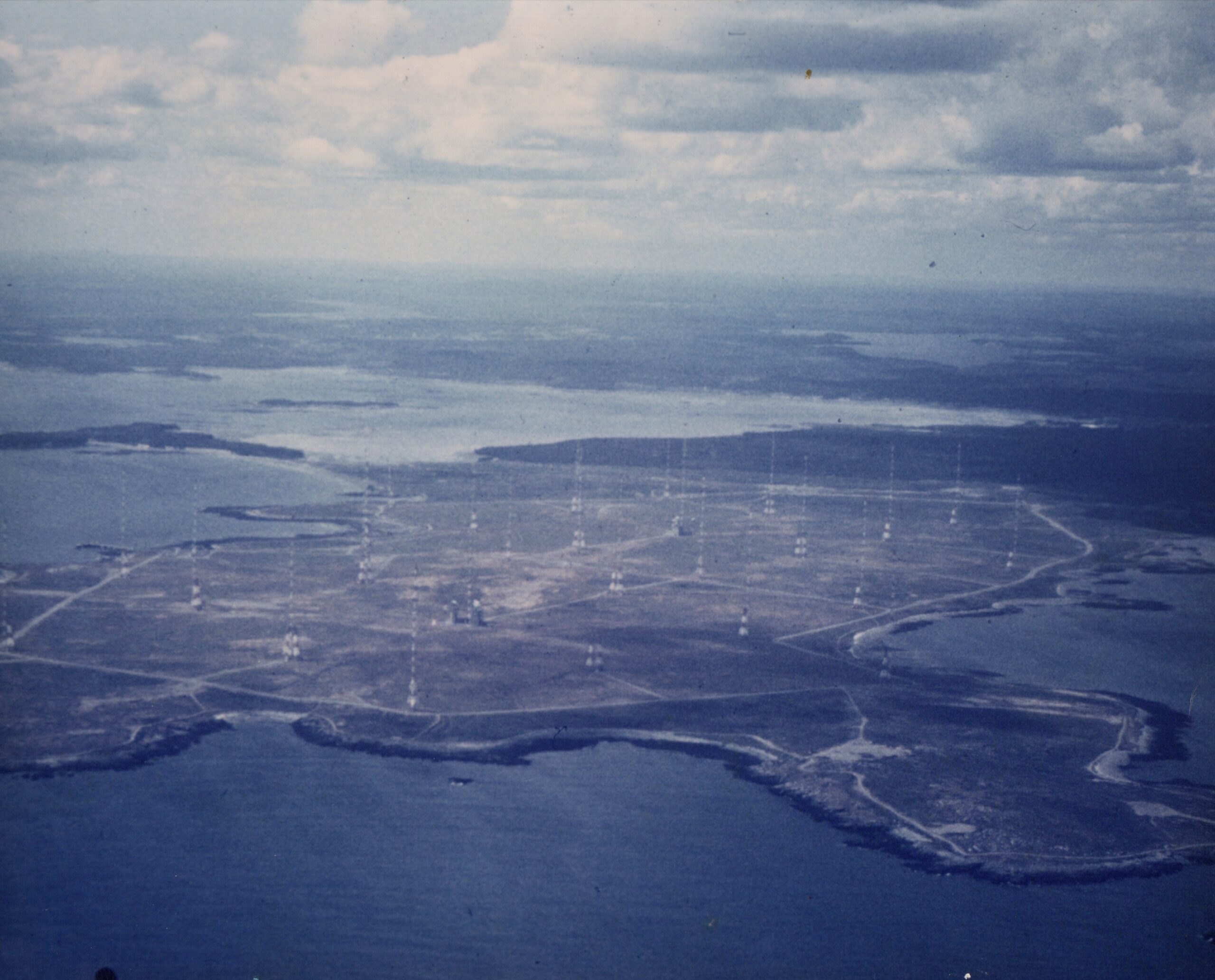
I was stationed at Naval Computer and Telecommunications Station Cutler, Maine — a remote posting in Washington County on the Down East coast, not far from the Canadian border.
Most people drive past it and see nothing but forest and fog. What they can’t see is what lives below those towers.
The station runs a 2 megawatt VLF (Very Low Frequency) transmitter – 20 times the output of a major commercial radio station making it one of the most powerful radio transmitters in the world. Its mission: maintain a continuous communications link between the Navy’s command authority and submarines operating in the North Atlantic, Arctic Ocean, and Mediterranean Sea, in waters where HF radio is notoriously unreliable due to auroral interference.
The station transmits under callsign NAA at 24 kHz — a frequency so low it can penetrate seawater and reach submarines running deep and silent.
The antenna system consists of two massive arrays, each built around 13 towers — a central mast nearly 1,000 feet tall, surrounded by inner and outer rings of progressively shorter towers. Together, the 26 towers keep miles of suspended cable in the air, forming what’s called a trideco or umbrella antenna. The site spans nearly 3,000 coastal acres and includes more than 2,000 miles of copper wire underground and in the ocean.
During inclement weather, ice buildup on the antenna cables was a serious operational challenge. When icing occurred, one of the two arrays would be taken offline, disconnected from the transmitter, and connected to AC power generators — where raw 60 Hz current would flow through the cables, turning the entire array into a resistance heating element and melting the ice. The two arrays would alternate: one remaining online and transmitting while the other was being de-iced. This wasn’t a trivial power draw — the de-icing load actually exceeded the transmitter’s own output, requiring the station to maintain its own dedicated power plant. When the facility was originally erected, the local grid simply didn’t have the capacity to support operations of this scale.
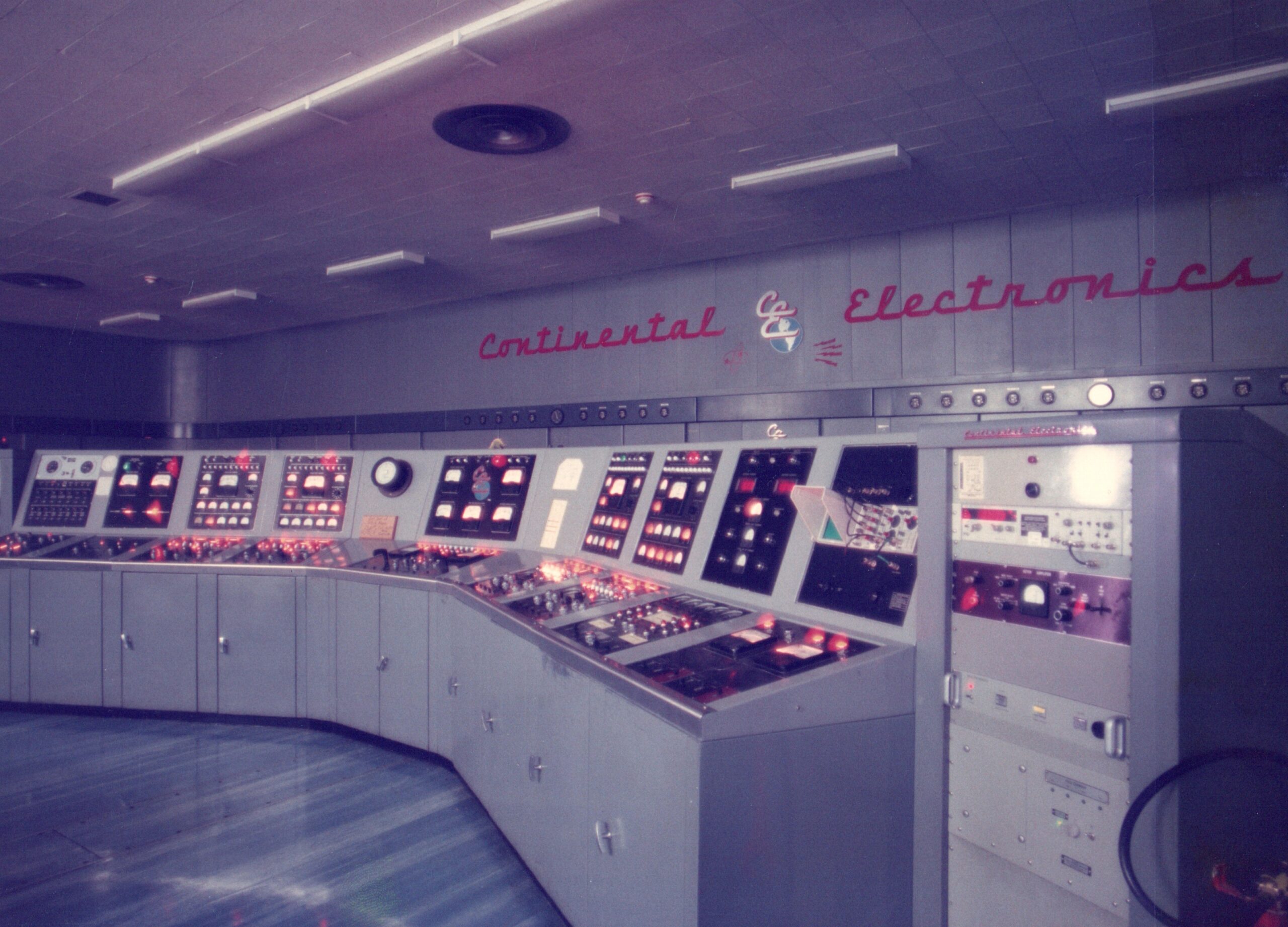
Here’s what most people don’t know: the transmitter wasn’t inside a building. The building was the transmitter. The entire structure was the hardware. You worked inside the machine itself.
The AN/FRT-31 transmitter system used four final power amplifiers, each delivering 500 kW through a bank of large air-cooled vacuum tubes arranged in push-pull parallel configuration. Walking those decks meant being inside an active RF power plant unlike anything most technicians ever see.
My primary responsibility was the VERDIN/ISABPS system — the shore-side equipment that was the communications backbone connecting command authority to the submarine force. The VERDIN terminal multiplexed, encrypted, encoded, and modulated up to four 50 baud submarine broadcast channels into VLF signals, which were then amplified and radiated by the antenna. ISABPS generated the continuous two-hour broadcast sequence and fed it directly into VERDIN for transmission. I became the primary VERDIN/ISABPS tech at the station and eventually the top transmitter tech on the deck.
VLF was — and is — one of the few communication systems that provides survivable, independent connectivity with nuclear forces during crisis scenarios. That’s not background noise in the mission statement. That’s what you feel when you’re the one keeping that transmitter on the air.
From the Scotland highlands supporting submarine SATCOM and HF, to the Maine coast keeping the VLF broadcast alive — my Navy years were spent doing communications work that had real stakes.